

How EyeChip works : Pupil / Glint / Blink / Gaze
EyeChip is a single-chip solution that captures and processes eye signals in real time—directly at the sensor.
1. The Problem
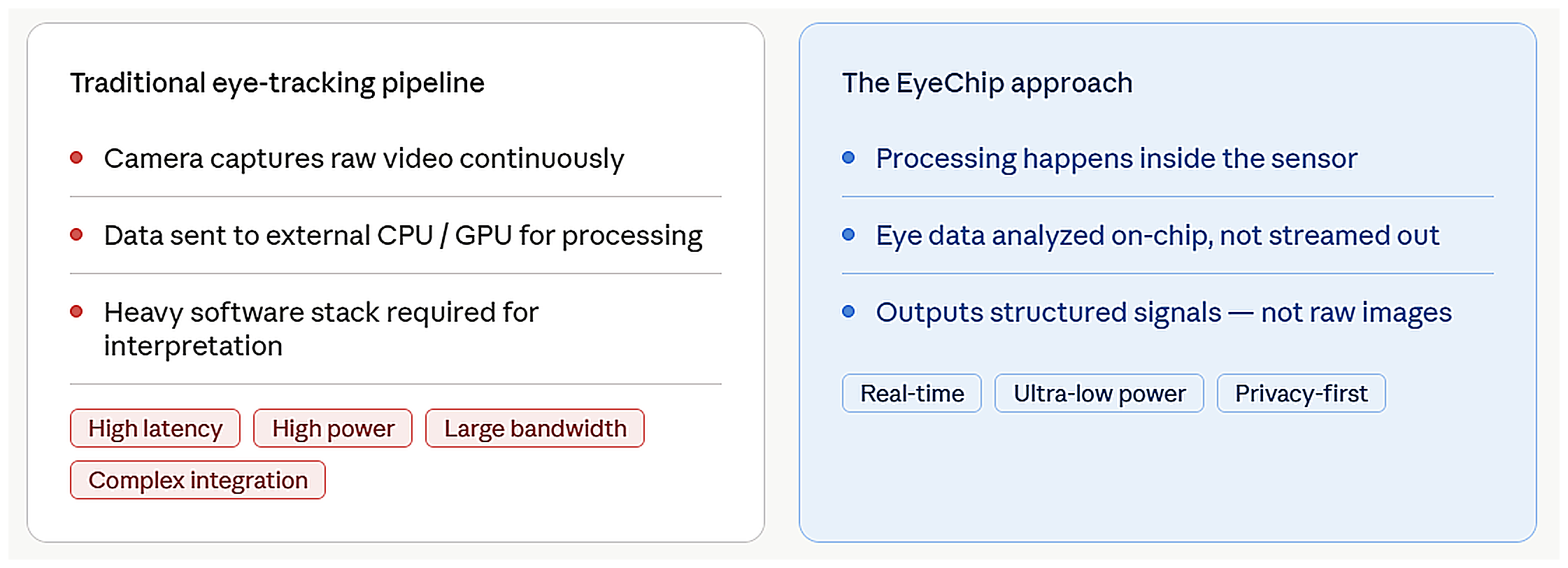
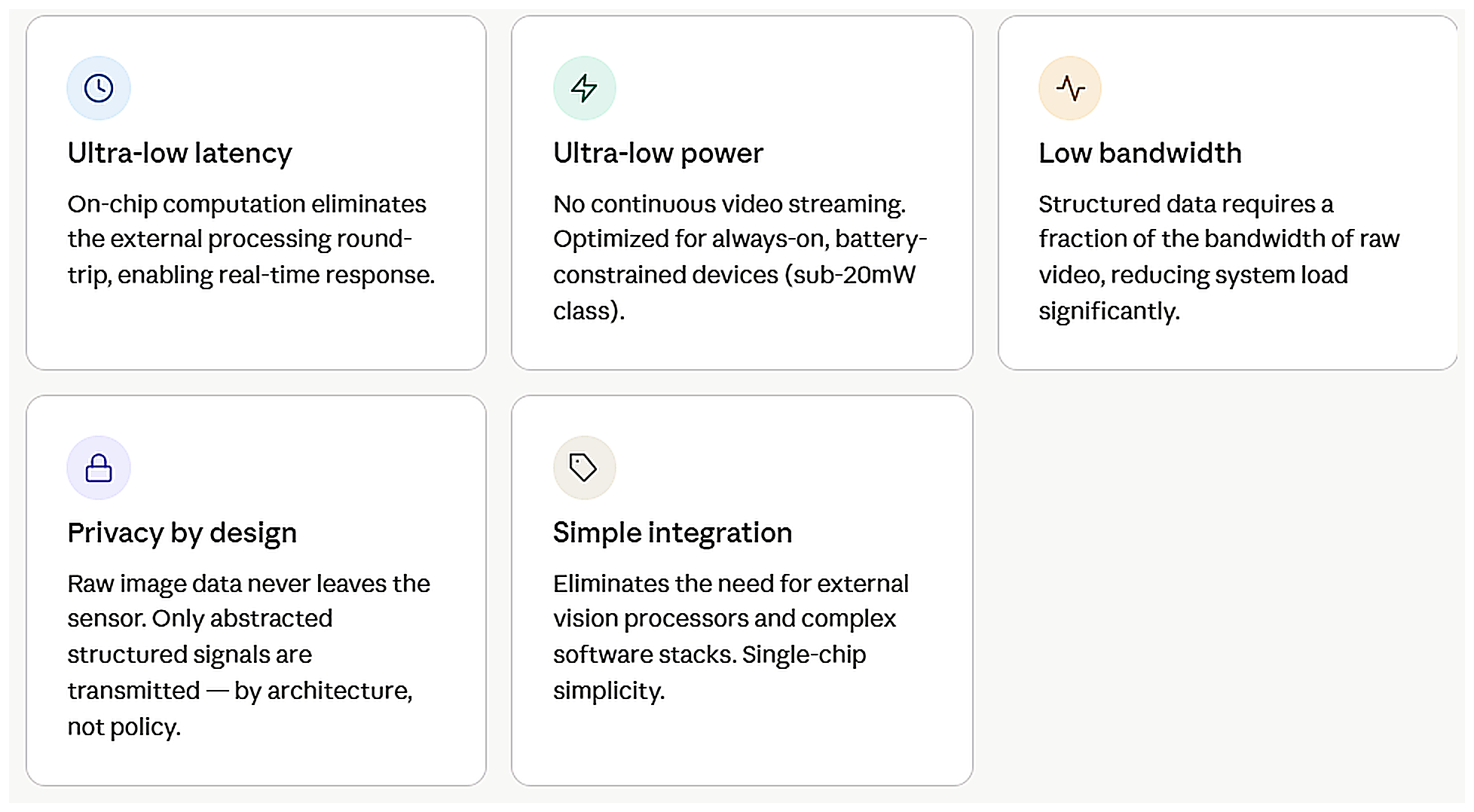
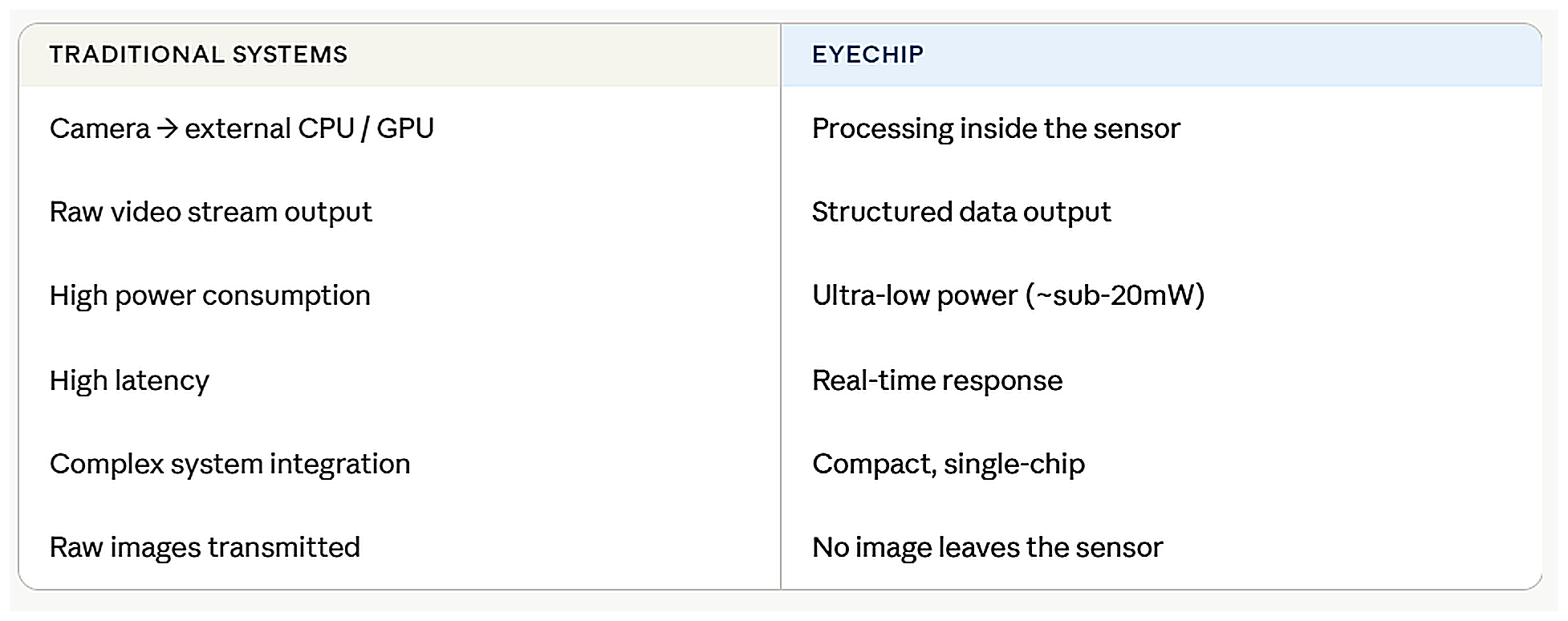
Most eye-tracking systems follow the same architecture: a camera captures raw video, sends it to an external CPU or GPU, and a software stack interprets the data. This pipeline works — but it comes at a cost. The result is high latency, high power consumption, heavy bandwidth usage, and a system integration burden that makes deployment in compact or embedded devices impractical.
2. The EyeChip Approach
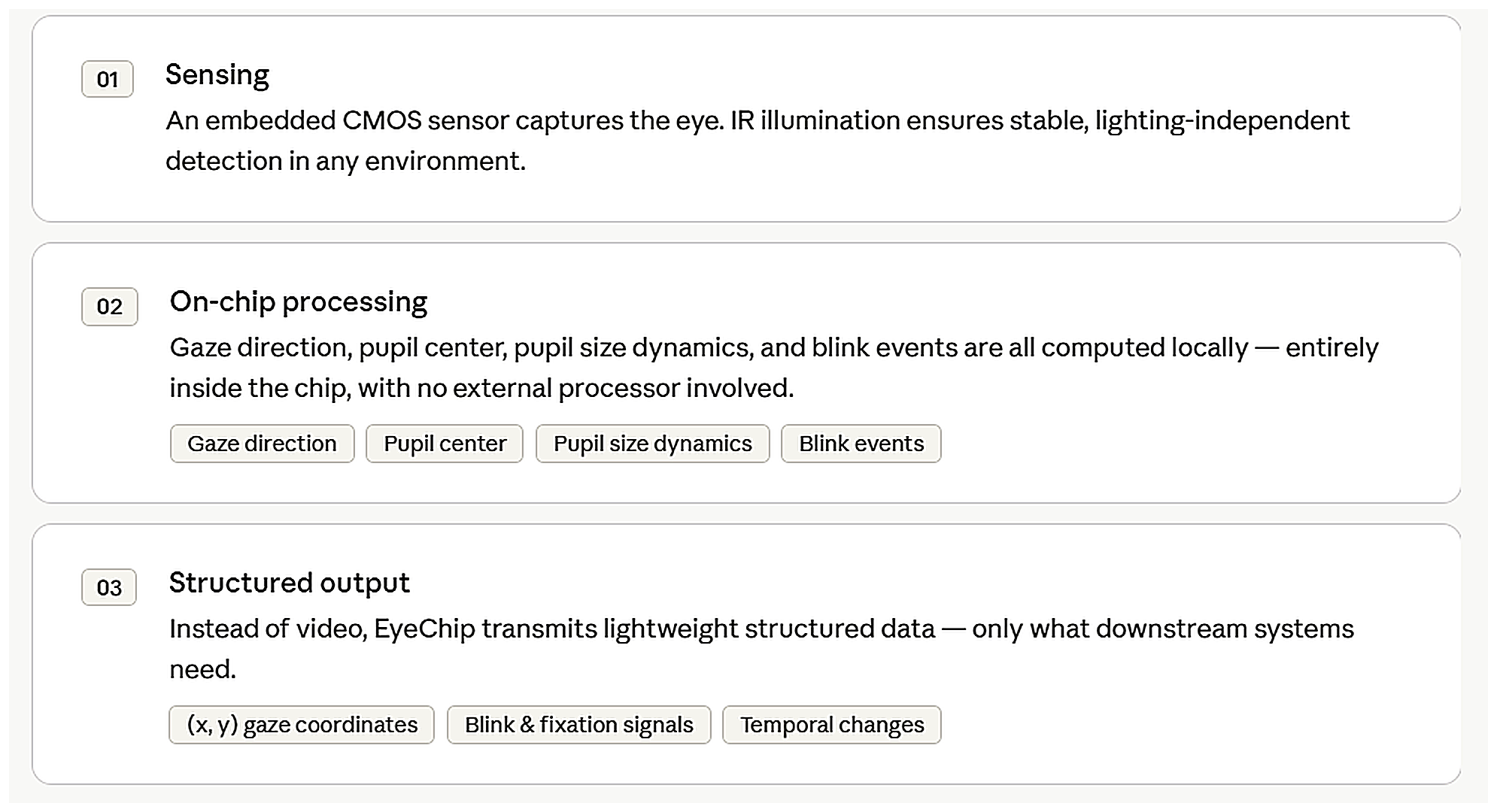
EyeChip moves processing inside the sensor itself. Rather than streaming video to an external processor, EyeChip analyzes eye data on-chip and outputs structured signals — not images. Gaze direction, pupil center, pupil size dynamics, and blink events are all computed before any data leaves the chip.
This is the fundamental shift: from a vision pipeline to a sensing intelligence.
3. How It Works
4. Key Advantages
5. EyeChip VS. Traditional systems
6. What It Enables
EyeChip makes it practical to build devices that previously required external processing infrastructure:
Lightweight smart glasses and XR headsets. Always-on wearables with multi-day battery life. Embedded human-interface systems for automotive and medical. Scalable eye-tracking in mass-market consumer devices.