




Everyone in AR/XR talks about gaze vectors, vergence, foveation. Almost no one talks about blink.
But here’s what we see inside the data:
blink = intention
Blink is a discrete signal. Unlike gaze (which is continuous and noisy), blink is a natural source of binary gating. In other words, a blink is like a “click” that the brain already uses.
blink = dramatically cheaper compute
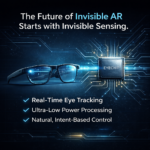
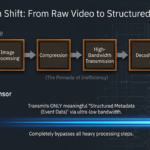
For real-world wearable devices, we care about power budget first. Blink detection → can be computed directly at the sensor plane with very low compute.
We’ve run internal benchmarks where blink-driven interaction reduces inference cycles by >70% vs continuous framewise gaze-classification loops, simply because the system can sleep until a blink wakes it.
blink = medical signal
Micro-blink frequency + blink dynamics correlate with:
- cognitive fatigue
- dopaminergic regulation
- ADHD markers
- dry eye / tear film stability
This is why in medical HCI, blink might become a new vital sign. There is enough peer-reviewed literature that blink frequency is diagnostic-grade.
Why this matters:
As the industry keeps pushing for “all-day smartglasses” — UX will not be defined by 4K micro-OLED. It will be defined by whether the interface is energy-aligned with the biology of the human in front of it.
Blink is biology’s native low-power interface.
And if the future of AR input looks more like the iPod clickwheel than a floating 3D keyboard — blink might be the next “tap & click”.
#EyeTracking #InSensorAI #AR #XR #Semiconductor #MedicalAI #HCI #NeuroTech #Wearables
References / Credibility
Smilek, D., Carriere, J.S., et al. “Failures of sustained attention: Evidence for an attentional blink.” Cognition (2010). Bentivoglio, A.R., Bressman, S.B., et al. “Analysis of blink rate patterns in normal subjects.” Brain (1997). McMonnies, C.W. “Blink efficiency as a clinical measure.” Clinical Optometry (2020).