





Consumers don’t want bulky headsets, heat, short battery life, or awkward interfaces.
The winning AR product will feel like normal eyewear — lightweight, always-on, and effortless.
That future requires more than software.
It requires a new sensing architecture.
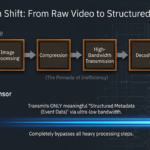
Traditional AR systems rely on cameras, processors, and heavy software stacks that increase power consumption, latency, heat, and privacy concerns.
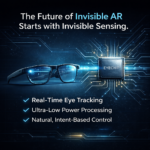
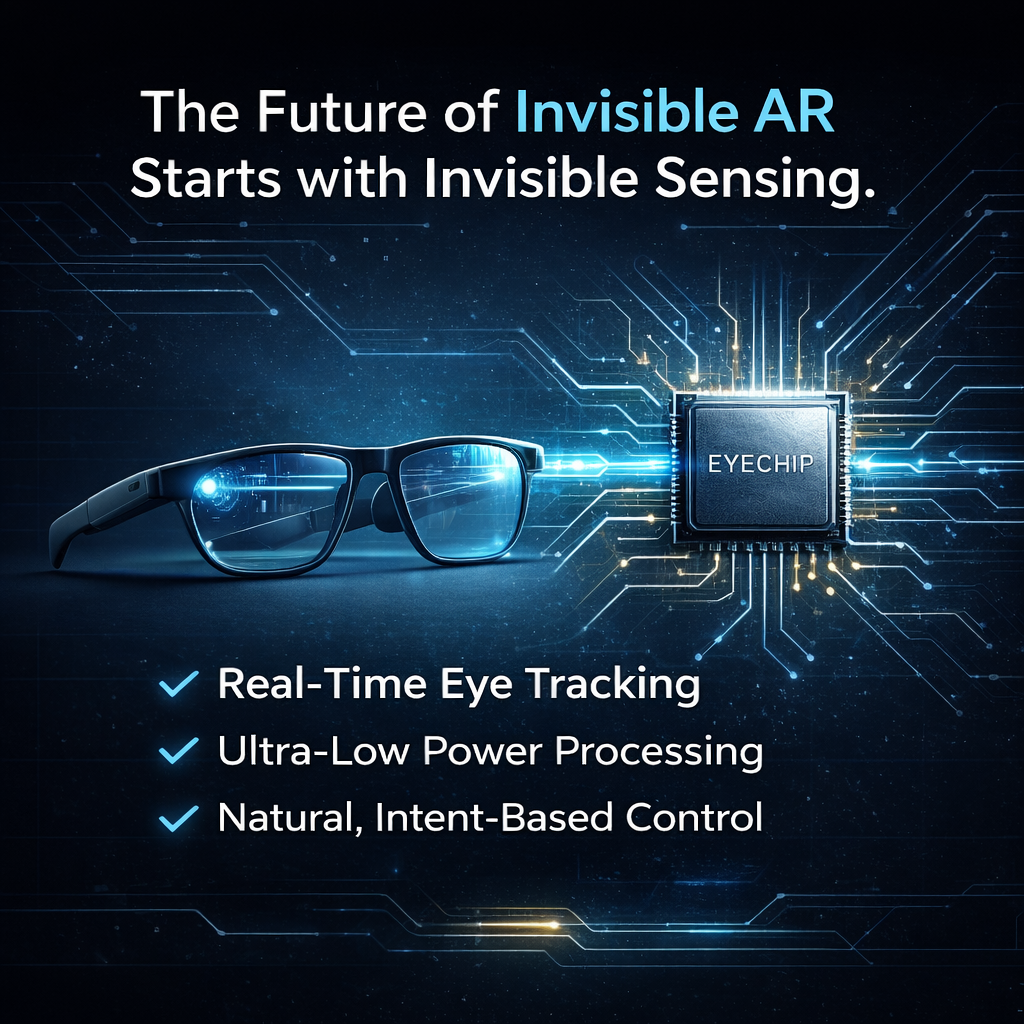
EyeChip takes a different approach by embedding intelligence directly into the sensing layer.
👁️ Real-time gaze, blink, and pupil sensing at the source
⚡ Ultra-low power for all-day wearable use
⏱️ Sub-millisecond response for natural interaction
🔒 No continuous raw video dependency
🕶️ Smaller, lighter device designs
This enables the shift from:
Visible AR Devices → Invisible AR Glasses
Heavy Compute → Efficient Sensing
Awkward Control → Intent-Based Interaction
Invisible AR starts with invisible sensing.
The next generation of smart wearables may begin at the chip level.
#AR #SmartGlasses #Wearables #Semiconductor #EdgeAI #XR #FutureTech