




The pursuit of lightweight, low-latency, and high-fidelity XR systems demands a fundamental shift in processing architecture. We are moving beyond relying solely on powerful compute layers.
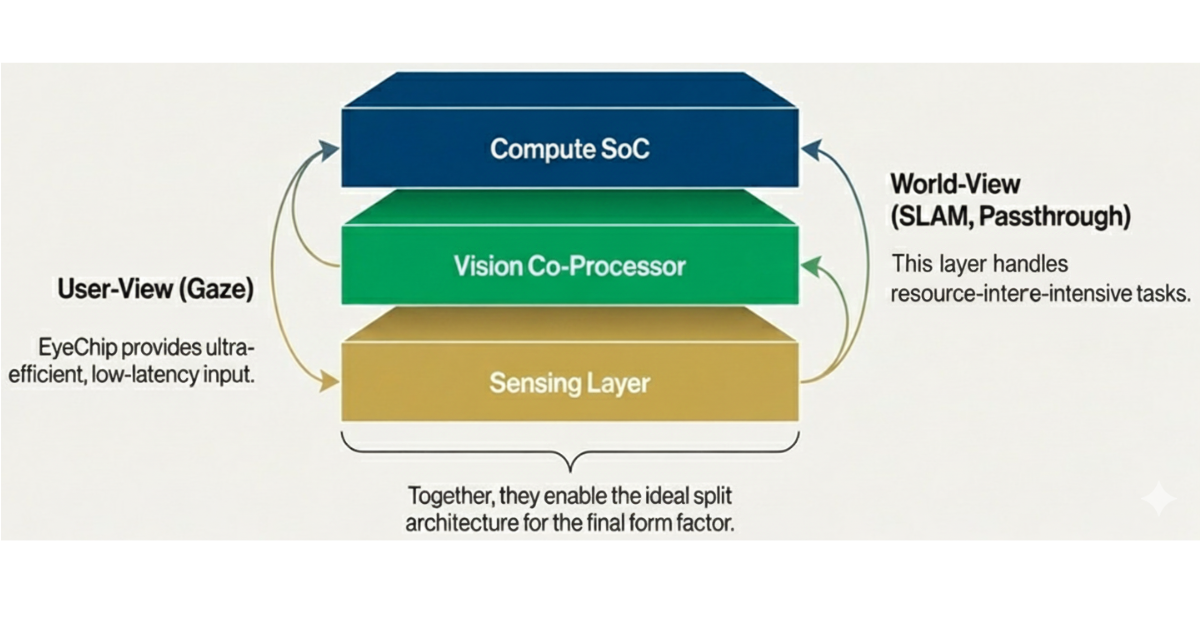
The most optimal and efficient XR systems of the future will adopt a specialized, 3-Layer Split Architecture:
Layer 1: Compute SoC (The Brain): Handles high-level application processing.
Layer 2: Vision Co-Processor (The Eyes): This layer handles resource-intensive tasks like SLAM and Passthrough (World-View).
Layer 3: Sensing Layer (The Nervous System): This is where specialized sensor input begins.
Our EyeChip technology perfects Layer 3, acting as an ultra-efficient, low-latency provider of User-View (Gaze) data. This is synergy, not competition. We are upgrading the stack.
The Benefit of the Split: By delegating ultra-efficient, low-latency Gaze input to the EyeChip, we free up the Vision Co-Processor and Compute SoC to focus entirely on resource-intensive World-View tasks. Together, they enable the ideal split architecture for the final form factor—lighter, cooler, and longer-lasting.
This is how we achieve the true breakthrough in power efficiency and immersion.